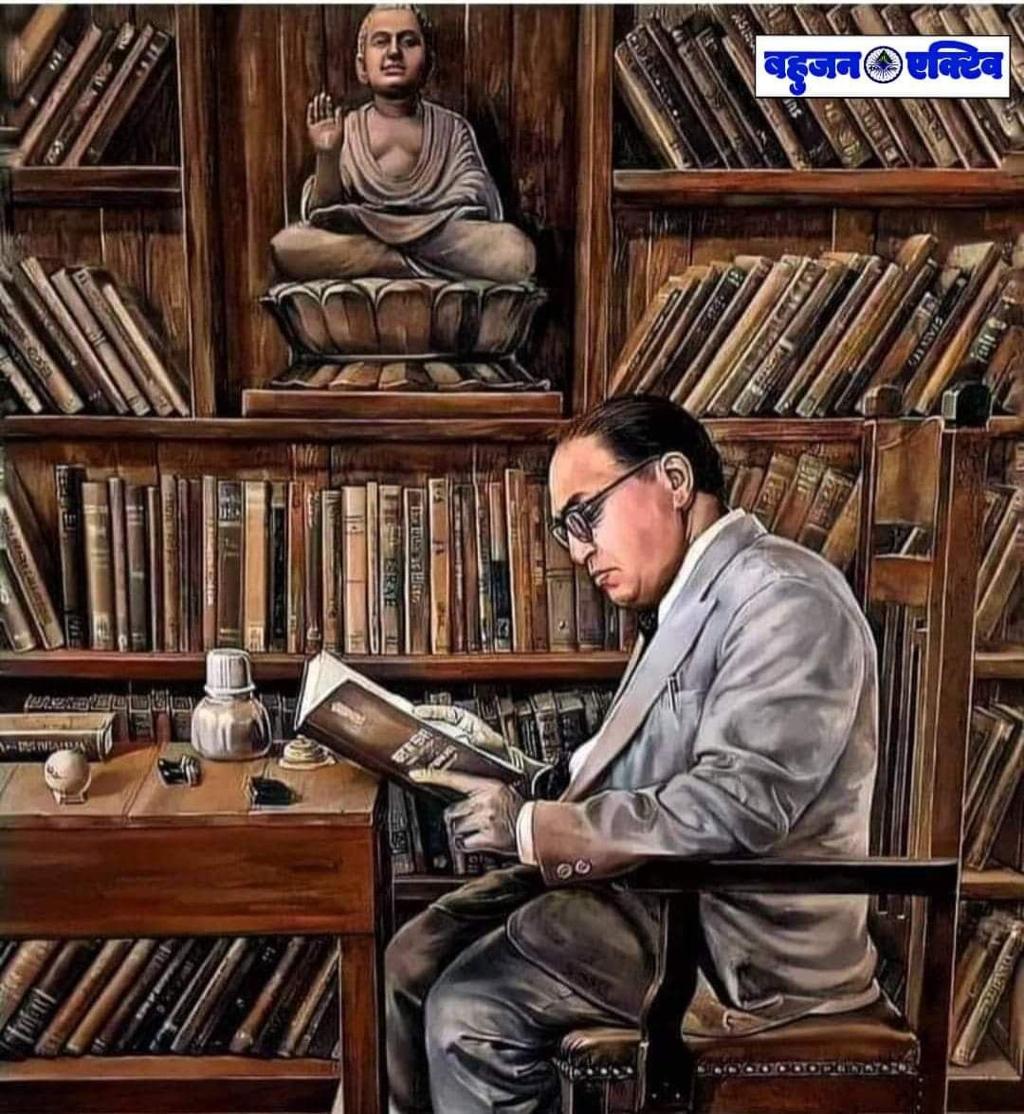
“You should always have a book in your hand, even if you are not wearing footwear.”
Dr. Bhimrao Ambedkar was not allowed to sit inside classrooms. He had to bring his own carpet and sit in a corner, often near where shoes were kept. Drinking water was not a basic right; a peon would pour it from a distance to avoid “touch.” If the peon didn’t come to school that day, he wasn’t allowed to drink water at all. Not by choice, but because he wasn’t allowed to.
Now ask yourself: Can we go even one hour without water?
In office, files were thrown at him instead of being handed over. Water wasn’t served, it was given with hesitation, almost disgust.
This raises a powerful question: What kind of mindset discriminates against someone who later becomes one of the most educated minds in the world?
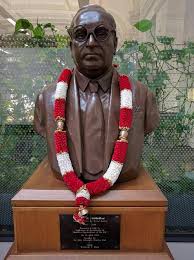
He strongly believed: education is the most powerful tool against oppression. He pursued higher education at Columbia University and the London School of Economics. His statue is their at London School of Economics & Colombia University which is a great Pride for India.
He earned multiple doctorates, specializing in economics, becoming one of the most learned scholars of his time.
By 1938, he owned around 8,000 books, and by the end of his life, his collection had grown to 35,000 books.
For him, education wasn’t just learning, it was resistance, empowerment, and revolution. Inspired by Gautama Buddha, Kabir, and Jyotirao Phule, he began shaping a vision of equality.
When he returned to India, no one came to receive him. He struggled to find accommodation due to his caste. Even a temporary stay in a lodging place was cut short when people discovered his identity. Friends hesitated to host him due to family pressure.
Yet, instead of leaving India for a more comfortable life abroad, he chose to stay and fight for change within the system.
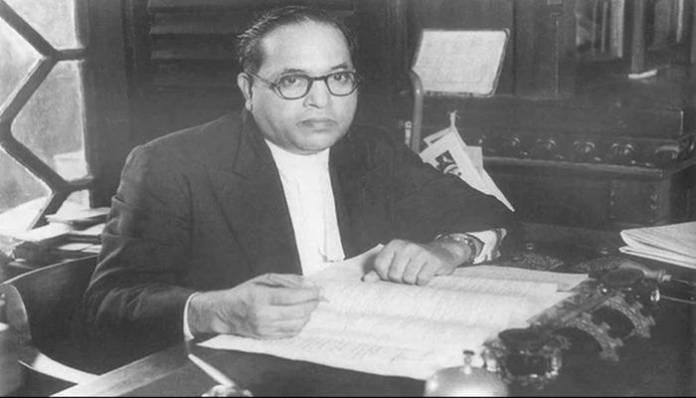
Dr. Ambedkar became the chief architect of the Constitution of India, making him one of the most influential figures in Indian history. He was among the most well-read individuals involved in its creation.
He emphasized that individuals should be judged by talent and hard work, not caste. He advocated for equality, dignity, and fundamental rights for all citizens.
His contributions went far beyond the Constitution:
Introduced concepts like minimum wages and overtime allowance. Played a key role in shaping Provident Fund systems. Strong advocate for women’s rights and supported ideas like a Uniform Civil Code. Promoted education for girls, ensuring future generations of women could access opportunities.
His mother, Bhimabai, urged him to study as it was the only path to dignity. When she was dying, no doctor came to treat her due to caste discrimination. This painful experience became a turning point, fueling his mission to eradicate untouchability, which he saw as a social disease.
He had the opportunity to live a comfortable life abroad, but he chose India. He chose: Struggle over comfort, Reform over escape, Legacy over luxury. Because of his efforts millions today have access to education, women have greater rights and representation, social equality is a constitutional promise.
His life is not just a story, it is a movement. From being denied a seat in the classroom to drafting the Constitution of India, his journey reminds us that true greatness is built through courage, knowledge, and purpose.
We owe it to him to not just remember his name, but to understand his vision.
Today, we go to schools freely.
We drink water without fear, speak of equality as a right.
But all of this came at a cost
A cost paid by people like Dr. B.R. Ambedkar.
He have chosen change over comfort, voice over silence and India over escape.
“He wasn’t allowed to sit in class… but he wrote the Constitution of India.”
This blog is a little different from what I usually post. After watching a podcast by Vikas Divyakirti (which inspired this piece), I felt extremely grateful to B. R. Ambedkar for shaping the India we live in today. I hope you all like it, do let me know your thoughts in the comments.
Thank you.
Inspiring 👏🏻
Thank you, Rohit.